Airfield Automation Moves From Concept to Operational Reality
Key Highlights
- Airfield automation leverages sensors, AI, and real-time data to improve runway safety, vehicle tracking, and turnaround efficiency.
- Innovations include automated runway condition reporting, autonomous cargo and passenger transport, and intelligent lighting systems, enhancing operational safety and capacity.
- Implementation challenges involve data integration, infrastructure redesign, and navigating complex certification processes with ICAO, FAA, and EASA standards.
- Automation significantly reduces manual workloads, enabling airports to increase capacity without expanding physical infrastructure, crucial for space-constrained airports.
- Future developments focus on urban and advanced air mobility, requiring seamless coordination, digital infrastructure expansion, and resilient cybersecurity measures.
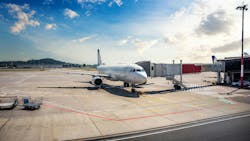
Airfield automation technologies, from runway surface condition monitoring to intelligent turnaround management systems, are an operational reality reshaping airport efficiency and safety standards today.
Driven by regulatory mandates, advances in sensor technology, artificial intelligence, and real-time data connectivity, airports are increasingly deploying sophisticated systems to track vehicle movements with precision and assess weather-related surface conditions in real time.
These innovations address immediate operational challenges while preparing the ground for emerging aviation paradigms, including urban air mobility and advanced air mobility operations. This article explores the current state of airfield automation, examining the technologies reshaping airport operations, the practical challenges of implementation, and the regulatory frameworks governing their deployment.
Advancements in airfield automation
Airport automation has grown at multiple levels, according to the Munich Airport team. “Over the past three to five years, airport automation has been driven by advances in sensor technology, connectivity, and intelligent decision support systems. Among the most impactful technologies are the automation of turnarounds and workflows through tracking, which leads to greater efficiency in turnaround management,” the team says.
“Another significant innovation has been the use of autonomous vehicles to transport cargo and passengers in the air without a driver on board. However, the interconnectivity of these AI-based systems will ultimately lead to the greatest benefit.”
In line with the latest International Civil Aviation Organization (ICAO) requirements, Changi Airport has implemented a new runway condition reporting system capable of automatically assessing and communicating changes in runway surface characteristics to air traffic controllers and pilots in real time, according to the Changi Airport Group team.
“This involves continuously monitoring and reporting the level of flowing or standing water on the runway surface in inclement weather, so air traffic controllers are more aware of operationally relevant environmental factors. Pilots can also use the information provided to better control aircraft performance during takeoff and landing,” the team says.
“This additional functionality builds on other airport safety features already in place at Changi, such as real-time monitoring and reporting of the operational status of individual airport lights, a camera-based intelligent foreign object detection system that provides 24/7 surveillance of the runways for foreign objects that could threaten aircraft safety, and regular measurements of runway surface friction levels and the photometric emission of individual airport lights using specially equipped vehicles, some of which go beyond ICAO standards and recommendations.”
Omar Binadai, chief technology and infrastructure officer (CTIO) at Dubai Airports, points out that airport automation has shifted in recent years from incremental upgrades to a more fundamental change in how airports operate.
“Advanced surface movement guidance and control systems (A-SMGCS) now provide automated routing, conflict detection, and runway intrusion warnings, giving controllers much deeper situational awareness. Airport lighting has seen a similar leap forward thanks to individual lamp monitoring and control systems (ILCMS), which allow for individual luminaire control and enable concepts like ‘Follow the Green.’
“On the apron, AI-based computer vision has matured rapidly and is now used for real-time monitoring of turnaround events and safety issues, replacing much of the manual observation that previously slowed operations,” Binadai says. “Runway safety has also improved thanks to sensor-based condition monitoring, which provides more accurate and timely information than traditional inspection methods. Most of the improvements concern surface movement, vehicle tracking, turnaround management, and runway safety, where real-time data and automatic alerts have replaced tasks that once relied on radio calls and human vision.”
Operational efficiency and airport capacity
The implementation and expansion of airside automation have had a positive impact on operational efficiency, which also influences airport capacity by reducing manual workload, improving situational awareness, and enabling faster responses to operational disruptions, according to the Munich Airport team.
“However, we must ensure that our high standards of safety, security, and service are maintained and improved during and after implementation. Another challenge is designing automation within existing physical infrastructure or redesigning processes that cannot be interrupted during the implementation phase,” the team says. “We typically conduct a thorough proof of concept (POC) before scaling a solution to test the best configuration within our system.”
Given Singapore’s tropical climate, where passing rain showers are frequent and may affect only part of a 4 km runway, the most efficient way to comply with the latest ICAO runway surface condition reporting requirement was to develop an automated assessment and warning system, explains the Changi Airport Group team.
“It is impractical for personnel to physically visit the runway every time to check its condition, as this could compromise the safety and efficiency of runway operations. After a thorough analysis of available technologies to perform this function, we selected an approach that leverages instantaneous rainfall intensity data from the Civil Aviation Authority of Singapore’s (CAAS) Advanced Weather Observing System (AWOS) and the digital ground-to-aircraft transmission capability provided by CAAS’ Automated Terminal Information Services (ATIS),” the team says.
“This approach interacts with mobile Differential Scanning Calorimetry (DSC) sensors provided by a local company, in collaboration with a Finnish instrumentation company, to create an innovative and integrated solution.”
To begin, Changi Airport used vehicle-mounted precision DSC sensors to map specific levels of flowing or standing water on different sections of the runway surface under known rainfall intensity conditions, as provided by AWOS, the Changi Airport Group team explains.
“Other factors, such as the water level on the runway surface relative to pavement slope and surface texture along different sections of each runway, were also determined. This empirical relationship is then derived and reported to air traffic control and automatically transmitted to pilots once the real-time precipitation intensity is known,” the team reports.
Automation has a clear impact on both efficiency and capacity, Binadai observes. “By automating vehicle tracking, runway checks, and turnaround monitoring, airports eliminate the small delays that accumulate throughout the day.
“This translates into more predictable on-time performance, increased apron availability, and improved use of taxiways and runways, resulting in increased capacity without the need for new infrastructure. This is even more crucial for a landlocked airport like Dubai, where expanding physical infrastructure is not an option and smarter capacity growth is essential to meet ongoing demand,” he says.
“Implementation times depend on a system’s close interaction with air traffic control (ATC) or runway safety, as these require more extensive testing. The main challenges tend to be data integration between multiple systems and supporting operations teams as they transition from manual processes to a more automated, data-driven way of working.”
Certification aspects
Any change or upgrade related to runway safety, ATC, or aircraft movement is classified as safety critical and must undergo a formal certification process, according to Binadai.
“This typically involves international standards from bodies such as ICAO, the European Union Aviation Safety Agency (EASA), the Federal Aviation Administration (FAA), and national civil aviation authorities. The approval process depends on the system’s impact on operations. Some upgrades can be certified under the airport’s governance framework, while others require careful regulatory oversight,” Binadai says.
“In practice, airports collaborate with regulators from the design stage to ensure the technology meets all requirements and to keep the approval process as efficient as possible.”
Urban and advanced air mobility
Looking to the future, urban air mobility (UAM) and advanced air mobility (AAM) will only work at scale if airports can handle significantly more low-altitude movements without increasing controller workload, Binadai affirms.
“This is why many of the automation upgrades underway today, from enhanced surface movement systems to digital authorizations, drone detection, and AI-powered turnaround tools, are laying the foundation for future air taxi operations,” he says. “In the UAM environment, automation will need to manage tracking and separation, automated recharging and parking, intelligent routing, and real-time data sharing between ATC, urban networks, and operators.”
To prepare for this shift, airports are investing heavily in digital infrastructure, Binadai adds. “This includes expanding Advanced Surface Movement Guidance and Control Systems, implementing greater video analytics, and adopting data-driven operational platforms such as Airport Collaborative Decision Making and Airport Operations Plans,” he says.
“Many airports are also starting to plan for vertiport integration and are strengthening cybersecurity and system resilience, recognizing that increased automation will require a more robust digital backbone.”
For UAM business cases to be sustainable, processes must be highly automated end to end, according to the Munich Airport team.
“Future vertiport projects and infrastructure concepts will reflect this requirement, integrating automated check-in, boarding, and turnaround procedures to achieve the required levels of efficiency and cost. At Munich Airport, the airspace is already very dense, and air traffic controllers operate under heavy workloads,” the team says.
“To enable automated and, in the future, autonomous traffic, multiple assistance and decision support systems will need to work seamlessly together. Since both the airspace and any future vertiport will have inherently limited capacity and will also be subject to significant traffic peaks, effective capacity regulation and scheduling management will be essential to ensure safe, reliable, and predictable operations.”
Looking ahead
The transformation of airfield operations through automation marks a fundamental redesign of how airports function in an increasingly connected and capacity-constrained environment. Airports are leveraging automation to enhance both safety and efficiency without the need for costly infrastructure expansion. For space-constrained airports, smart capacity solutions are essential for sustainable growth.
As UAM and AAM operations move from concept to reality, the digital backbone, intelligent decision support systems, and automated tracking capabilities now being implemented will play a critical role. Airports investing in these technologies today are positioning themselves to lead in an era where low-altitude air traffic, autonomous vehicles, and highly automated vertiport operations will demand new levels of coordination, resilience, and efficiency supported by advanced automation.